Retaining wall: complete guide to choosing the right technique
Landscaping a sloped site requires a rigorous approach. The retaining wall plays an essential role: stabilising the soil, structuring the levels, creating terraces, securing the edges, and enhancing the aesthetics of the garden.
A poorly designed wall can crack, deform, or collapse under the pressure of the earth, especially in Belgium where the soils are often clayey and sensitive to moisture. The best practices recommended by current civil engineering standards (CSTC, DTU, Eurocodes) emphasise three essential points:
- Mandatory drainage
- Foundations adapted to the ground
- Correct sizing according to height
Here is a clear, structured, and useful guide to choosing the technique suitable for your garden.
1. The main techniques of retaining wall
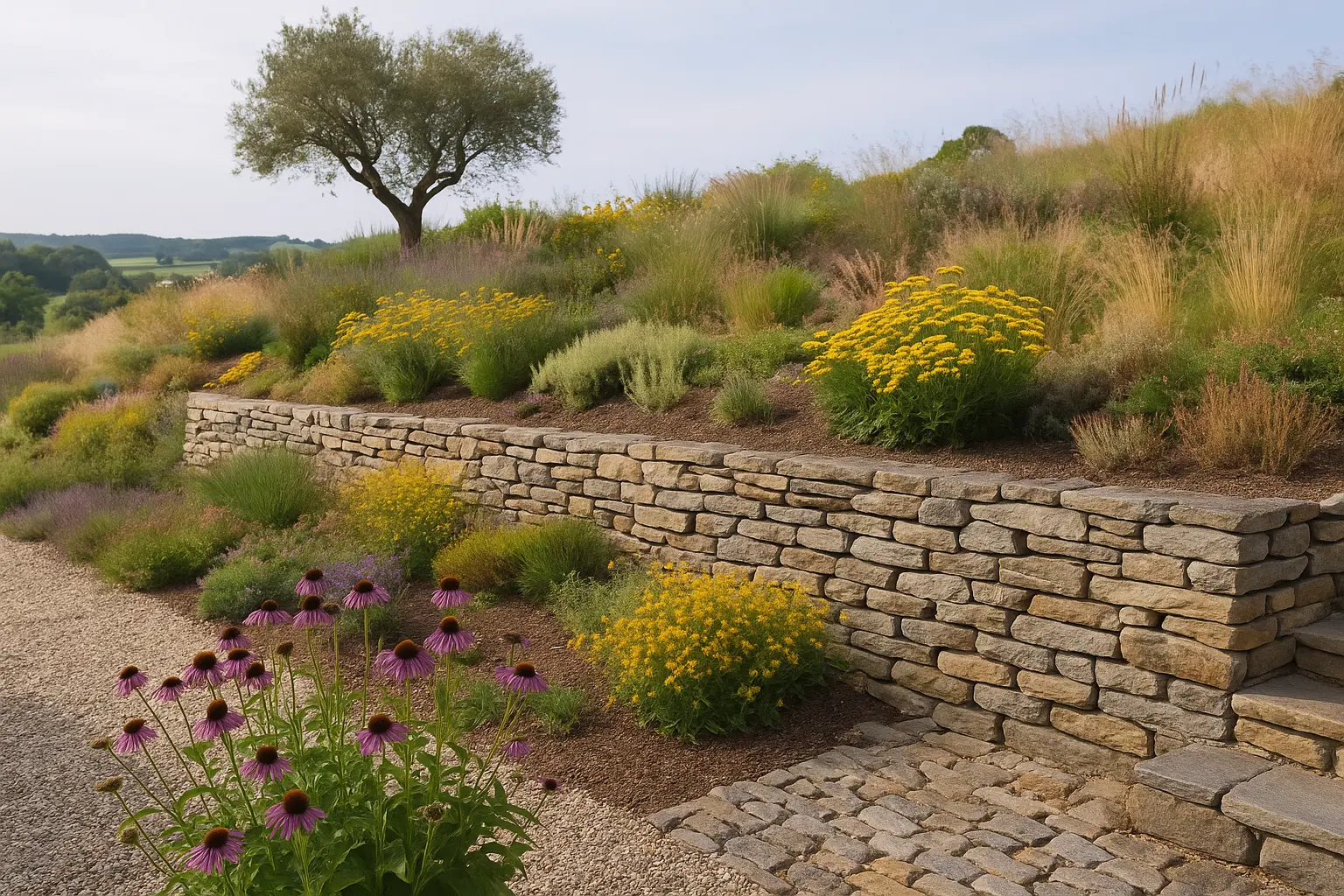
1. Dry stone wall
Traditional technique of stacking stones without mortar.
Ideal for: natural gardens, Mediterranean gardens, rural areas, gentle to moderate slopes.
Advantages :
- Excellent natural drainage
- Very aesthetic
- Perfect integration into the landscape
- Ecological
Limits :
- Height limited (often ≤ 1 m)
- Necessary expertise
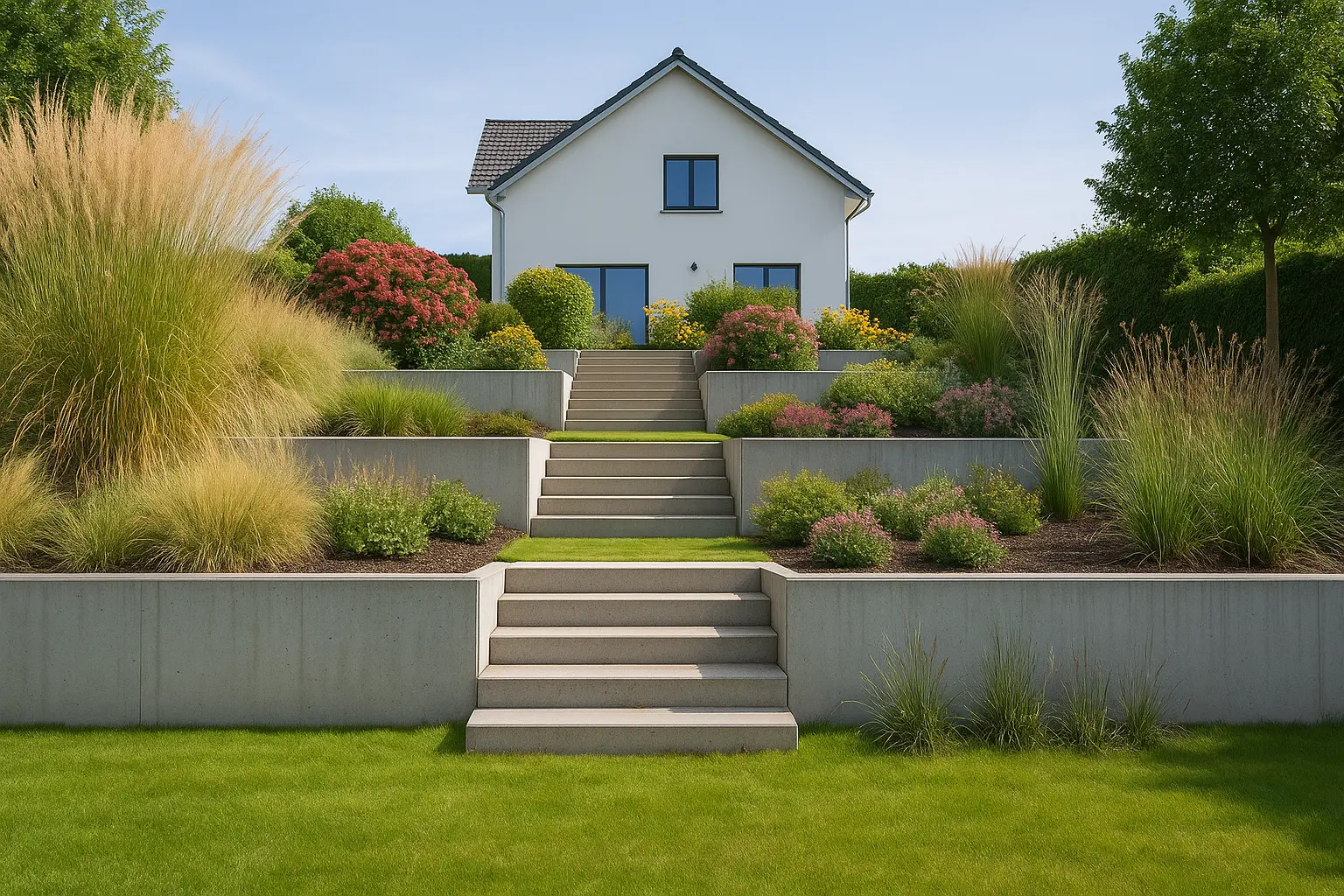
2. Reinforced concrete wall (type footing + shear wall or "nagaré" wall)
The most robust, used for significant heights.
Advantages :
- Very high resistance
- Suitable for very steep terrain
- Can carry loads (cars, terraces)
- Long lifespan
Limits :
- More expensive
- Requires strict drainage
- Significant visual impact without dressing
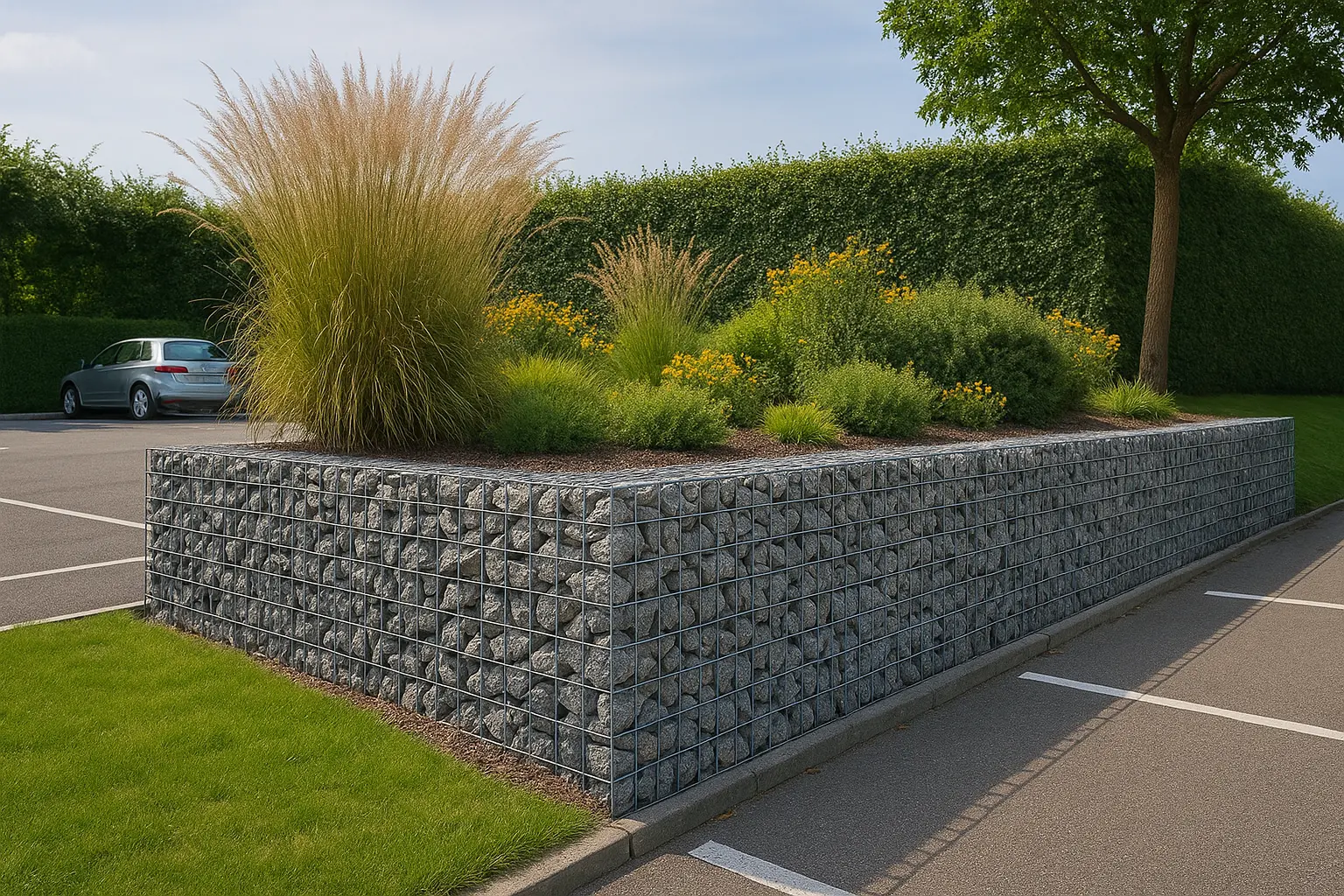
3. Gabion wall
Metal caissons filled with stones.
Advantages :
- Drainage excellent
- Very stable
- Quick assembly
- Contemporary style
Limits :
- Requires significant space in depth
- Life span depends on the quality of the cages
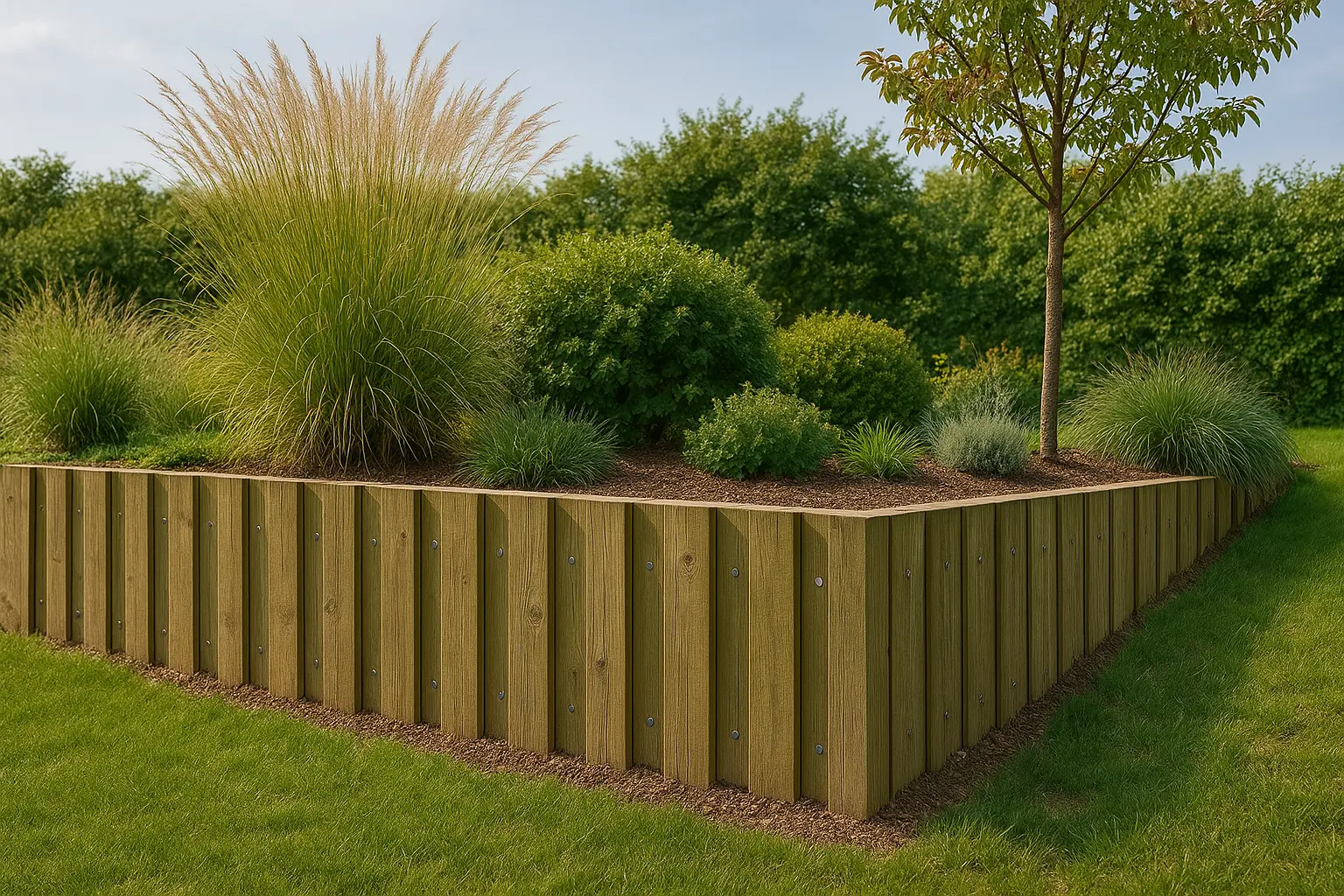
4. Timber support (beams, sheet piles, logs)
Often used in residential gardens.
Advantages :
- Warm aesthetic
- Quickly assembled
- Suitable for low heights
Limits :
- Shorter lifespan
- Sensitive to moisture if poorly drained
5. Stacked concrete blocks (modular masonry)
L-block type system, interlocking blocks or prefabricated elements.
Advantages :
- Quick installation
- Good stability for 1–2 m
- Very regular aesthetics
Limits :
- Requires a perfectly flat base
- Style plus "technique"
2. Comparative table of retaining wall techniques
| Technique | Estimated cost €/m² (Belgium)* | Recommended height | Sustainability | Necessary drainage | Style | Constraints |
| Dry stone | 150–350 € | ≤ 1 m | High | Yes (natural) | Rustic / natural | Skilled workforce |
| Reinforced concrete | 300–600 € | Up to 4 m+ | High | Indispensable | Modern / invisible yet dressed | Mandatory structural calculation |
| Gabions | 200–400 € | 1–3 m | High | Natural | Contemporary | Significant depth |
| Wood (accoya, oak, azobe) | 120–250 € | ≤ 1,5 m | Medium | Yes | Warm / natural | Sensitive to moisture |
| Modular concrete blocks | 150–350 € | ≤ 2 m | High | Yes | Regular / modern | Base plane, compaction |
* Non-contractual information, based on prices generally observed in Belgium in 2024–2025 (source: contractor rates, CSTC guides).
No exact value is guaranteed — only a realistic estimate is provided.
3. Sizing: what thickness for which wall?
According to the current principles of civil engineering:
Practical rule for a gravity wall (stone, gabion, heavy blocks)
Thickness ≈ 50% of the wall height
(example: wall of 1 m → base of approximately 50 cm)
For a reinforced concrete wall (L-shaped wall or nagaré type wall)
- Insole between 50% and 70% of the height
- Sail between 12 and 20 cm depending on height and load
These values must be confirmed by an engineer as soon as the height exceeds 1.50 m, as recommended by the CSTC.
4. Drainage: an absolutely essential point
A retaining wall rarely fails because of its structure... but very often because of water.
Technical advice to follow:
- Mandatory rear drain with gravel + geotextile
- Perforated drain laid at the foot of the wall
- Evacuation outlets (drainage holes) every 1.5 to 2 m
- Avoid clay soils at the back → prefer crushed stone 20/32
- Never stagnant water behind the wall
The technical documents of the CSTC emphasise that hydrostatic pressures can double or triple the pressure exerted on a wall.
5. Practical tips for successfully building a retaining wall
✔ Plan for a frost-free foundation
In Belgium: approximately 60–80 cm depending on the region.
✔ Compact the layers
Each layer of fill must be compacted to prevent settling.
✔ Decouple the wall from the damp ground
Geotextile + gravel bed.
✔ Check the planning regulations
Some municipalities impose:
- a maximum wall height
- local materials (stone, bricks…)
- an urban planning declaration
✔ Working with levels to create spaces
The support is not just technical: it allows for the creation of:
- terraces
- stairs
- stone benches
- deep planters
6. Which retaining wall to choose according to your garden?
For a contemporary garden
→ Gabions or concrete + wood/stone cladding.
Pour un jardin méditerranéen
→ Dry stone + olive trees + light gravel.
Pour un jardin flamand / cottage
→ Natural stone or masonry blocks + abundant vegetation.
For a very steep garden
→ Reinforced concrete.
Pour un petit jardin en ville
→ Wood or modular blocks.
7. Conclusion
The retaining wall is both a technical and aesthetic element. Its choice must take into account:
- the height to remember
- the quality of the soil
- the style of the garden
- the budget
- the desired sustainability
And above all… drainage is the top priority.
If you would like personalised advice for your sloped landscaping project, we can analyse your land, your constraints, and your style to define the most suitable solution.