Pavings: 20 patterns of cobblestones and slabs
The art of laying stone. Directory of traditional arrangements for sandstone cobblestones, bricks on edge and natural stone slabs.
20 boards · 5 families — Black & white boards: schematic laying plans — Loss: indicative edge cut
FAMILY 1 — Regular arrangements (with straight or staggered joints) ===
Rectangular modules laid in lines. Calm reading, controlled implementation, minimal cutting loss: the foundation of any paving, from the most contemporary to the most traditional.

PL.01 — Laying with straight joints
Synonyms: orthogonal arrangement · grid laying
Modules perfectly aligned in both directions: the joints intersect in a regular grid. The most understated and demanding laying — the slightest misaligned joint is visible along the entire length.
Materials: sandstone, blue stone, concrete, terracotta
Usage: Contemporary terraces, large formats, straight lines.
Cutting loss: low
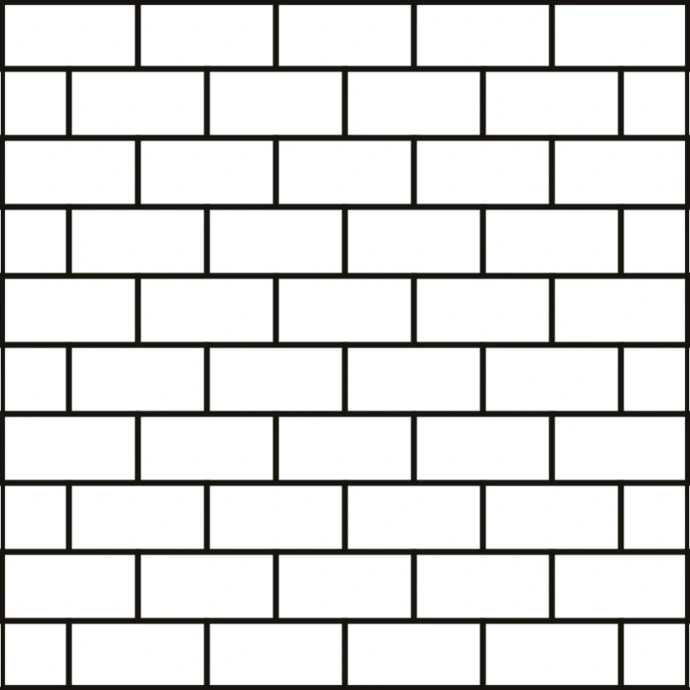
PL.02 — Laying with staggered joints — ½
Synonyms: broken joints · contrary joints · stone cut
Each row staggered by half a module on the previous one, like a laid brick wall. The stagger breaks the linearity and better accommodates small laying irregularities.
Materials: sandstone, blue stone, cobblestones, terracotta
Usage : Paths, terraces, walkways — the classic versatile.
Cutting loss: low
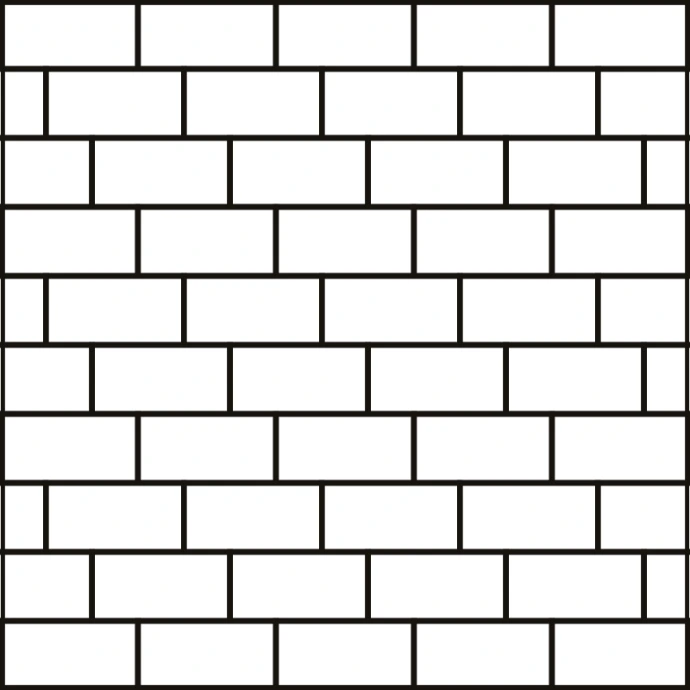
PL.03 — Staggered joint laying — ⅓
Synonyms : third laying · broken joints at a third
The offset of a third creates a soft diagonal in the grid. Particularly suitable for elongated modules, where a half-cut would create too mechanical a pattern.
Materials : sandstone, blue stone, concrete
Usage : Elongated modules, terraces with a more dynamic design.
Cutting loss: low
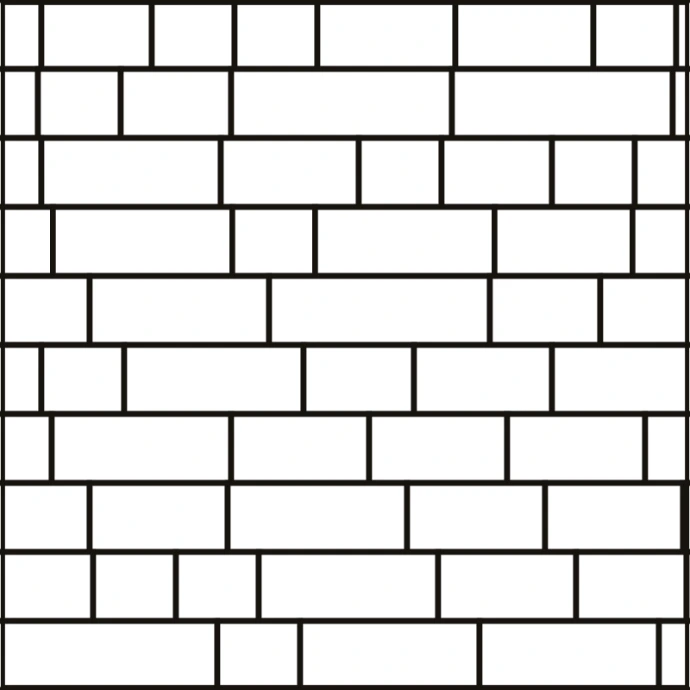
PL.04 — English bond laying
Synonyms : lost cut laying · irregular courses
Varied lengths and randomly staggered joints, in the manner of a dressed stone wall. Natural, almost ancient appearance, with no visible repetition from one row to another.
Materials : sandstone, blue stone, reconstituted stone
Usage : Characterful gardens, surroundings of old buildings.
Cut loss : average
FAMILY 2 — Directional devices (herringbone, chevron, diagonal)
The module takes a direction. The eye follows the diagonal or zigzag: assertive movement and great mechanical stability, at the cost of a more technical laying and more edge cuts.
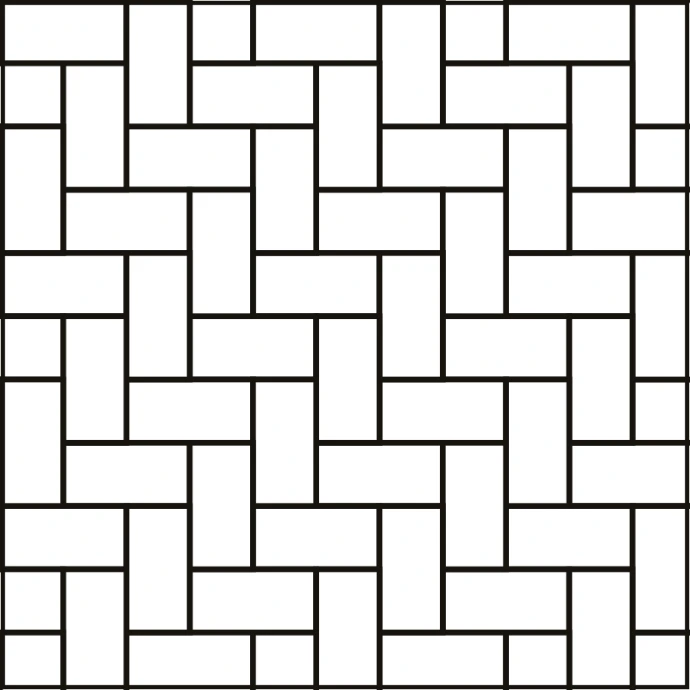
PL.05 — Herringbone laying
Synonyms : opus spicatum · broken sticks · fishbone
Right-angled modules, each interlocked with the next. Layout of Roman floors and villas: the interlocking gives it remarkable stability under load. The reference for brick on edge.
Materials : terracotta, sandstone pavers, blue stone
Usage : Driveable paths, courtyards, character terraces.
Cut loss : medium to high
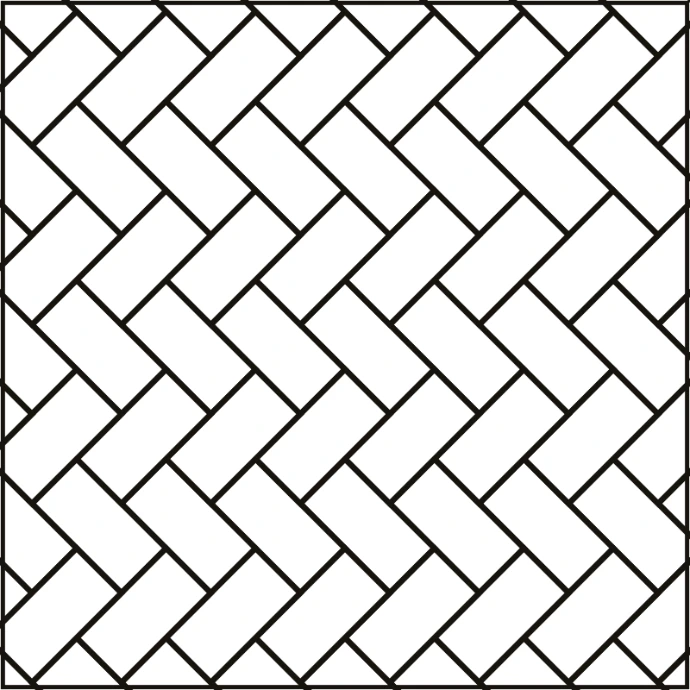
PL.06 — Herringbone laying at 45°
Synonyms : diagonal herringbone
The same weave, rotated 45° relative to the edges. The diagonal visually enlarges the space and directs the gaze towards a chosen point in the composition.
Materials : terracotta, sandstone pavers, concrete
Usage : Terraces and courtyards — enlargement effect.
Cut loss : high
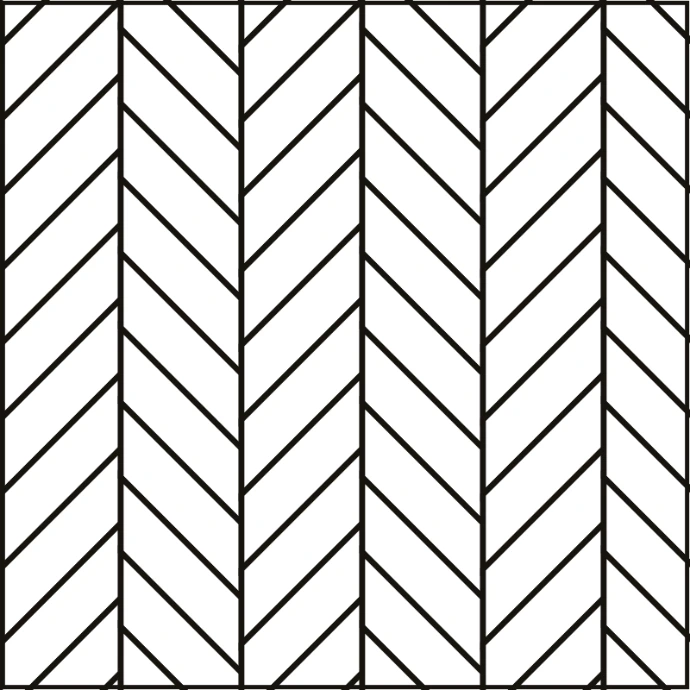
PL.07 — Hungarian point
Synonyms : chevron
Planks cut at 45° fitting point to point, forming V shapes with a sharp vertical seam. More refined than herringbone: the ultimate elegant signature, inherited from aristocratic parquet floors.
Materials : calibrated terracotta, sawn pavers, blue stone
Usage : High-end terraces and paths, calibrated modules.
Cut loss : high
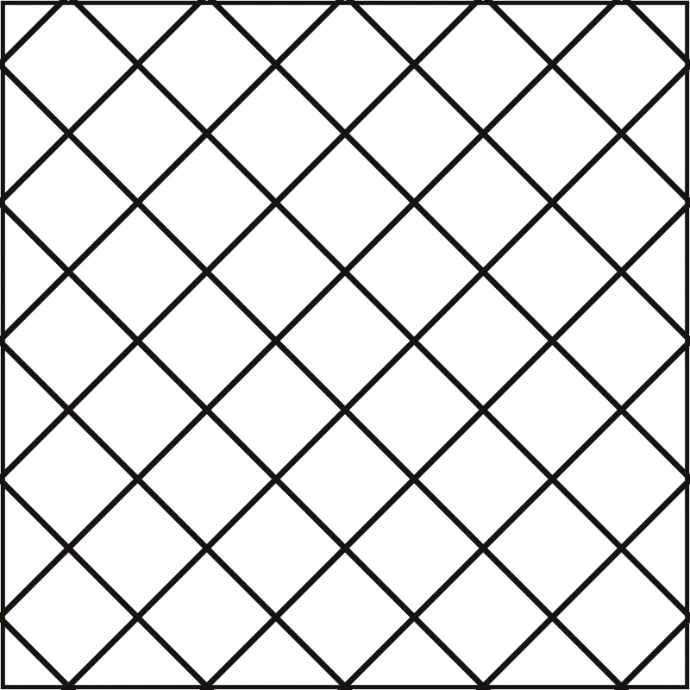
PL.08 — Diagonal laying
Synonyms : 45° laying · diamond pattern
Straight grid rotated at 45°: the lines flow towards the corners. Immediate dynamism and better resistance to traffic stresses, particularly on curves and slopes.
Materials : sandstone, blue stone, concrete
Usage : Courtyards, paths — increased stability on curves and slopes.
Cut loss : high
FAMILY 3 — Interlaced patterns (with motif)
The module repeats in blocks that interlace. Graphic patterns, very ‘craft’, perfect for small surfaces or as a decorative rug within a more sober paving.
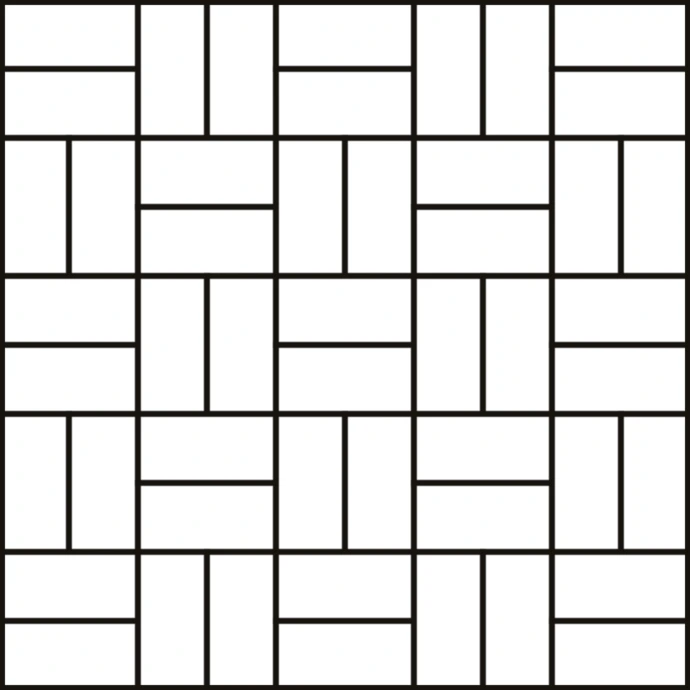
PL.09 — Basketweave laying
Synonyms: basket weave · basketweave
Pairs of modules alternate horizontal and vertical, like the strands of a woven basket. A warm and traditional pattern, typical of old garden pavings.
Materials : terracotta, sandstone pavers, blue stone
Usage: Charming terraces, decorative rugs, small spaces.
Cutting loss: low
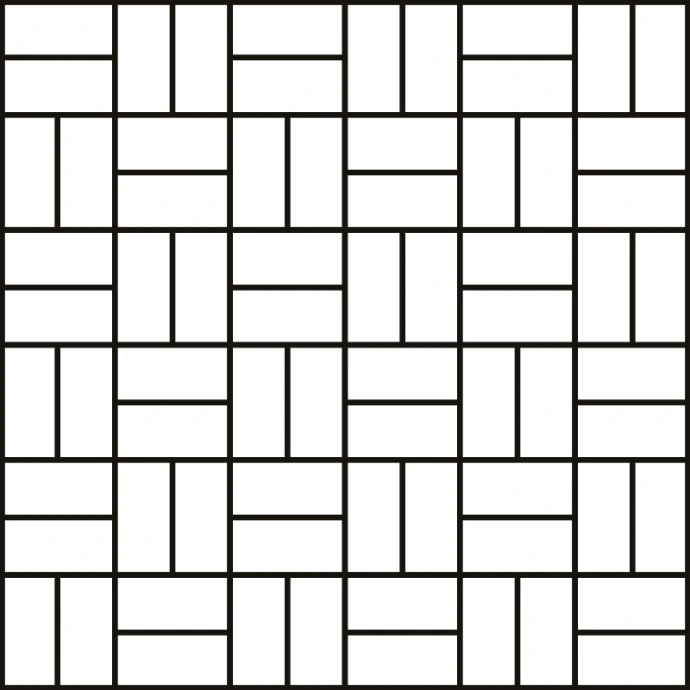
PL.10 — Checkerboard laying
Synonyms: panel arrangement · chessboard
Squares with alternating coursing — one horizontal module, its vertical neighbour. A graphic and rhythmic pattern, which gains strength by using two shades of materials.
Materials: blue stone + light sandstone, terracotta, concrete
Usage: Honour courtyards, two-tone patterns.
Cutting loss: low
FAMILY 4 — Curved & random arrangements (natural stone pavers)
The realm of stone paving and the craftsman's know-how. Arches, fans and free layouts embrace squares, alleys and characterful gardens: the DNA of historical pavings.
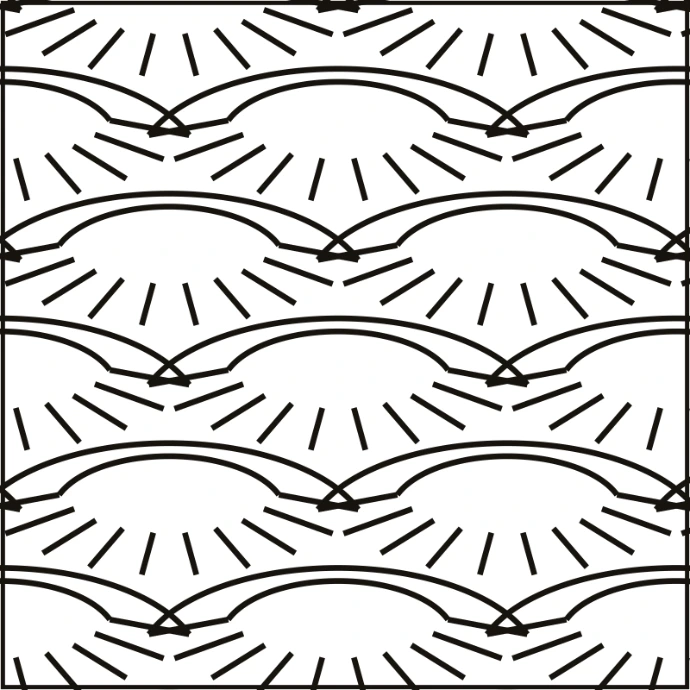
PL.11 — Segmental arch laying
Synonyms: semicircular laying · arches · Bogenpflaster
Small pavers arranged in successive arcs, each arc blocking the previous one. One of the most solid lays for natural paving — long reserved for trafficked paths and steep slopes.
Materials: sandstone pavers, porphyry, blue stone, granite
Usage: Courtyards, driveable paths, squares — slopes and turns.
Cutting loss: low
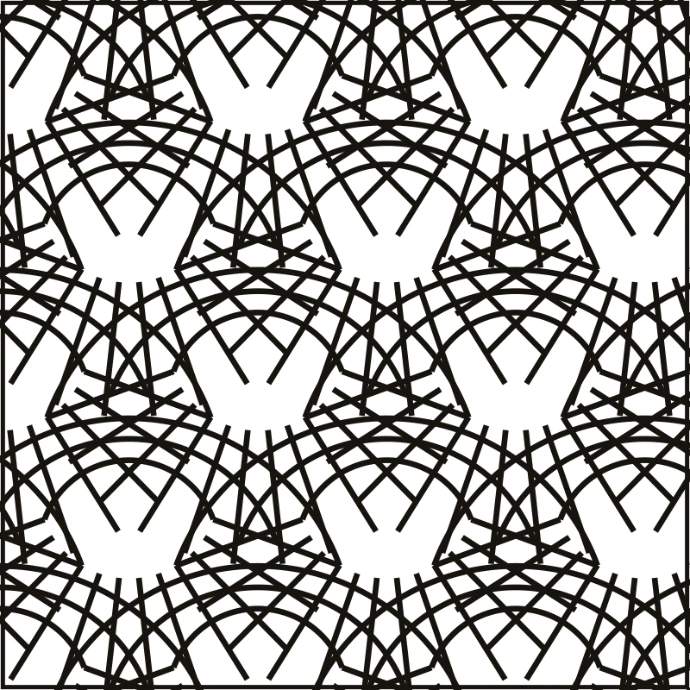
PL.12 — Fan / peacock tail
Synonyms: polycentric fans · shell laying
The arches are arranged in fans that respond to each other, paved with varied sizes converging towards points. The pinnacle of the paver's art, emblematic of ancient squares and courtyards.
Materials: sandstone paving, porphyry, granite
Usage: Squares, honour courtyards, decorative centrepieces.
Cutting loss: low
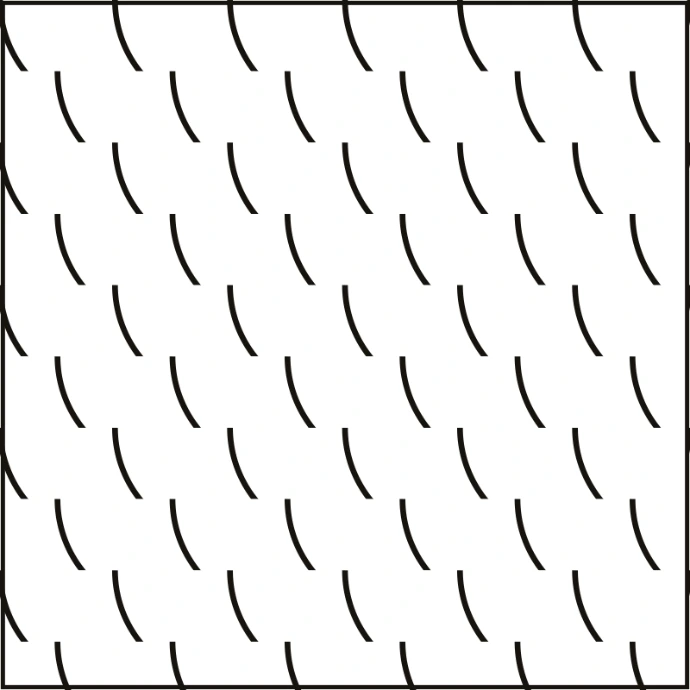
PL.13 — Fish-scale laying
Synonyms: fish-scale · shell laying
Arches overlap like the scales of a fish or the tiles of a roof. A pattern full of movement, rarer, to be reserved for surfaces that deserve to be looked at closely.
Materials: sandstone paving, terracotta, pebbles
Usage: Decorative carpets, punctuated patterns.
Cut loss : average
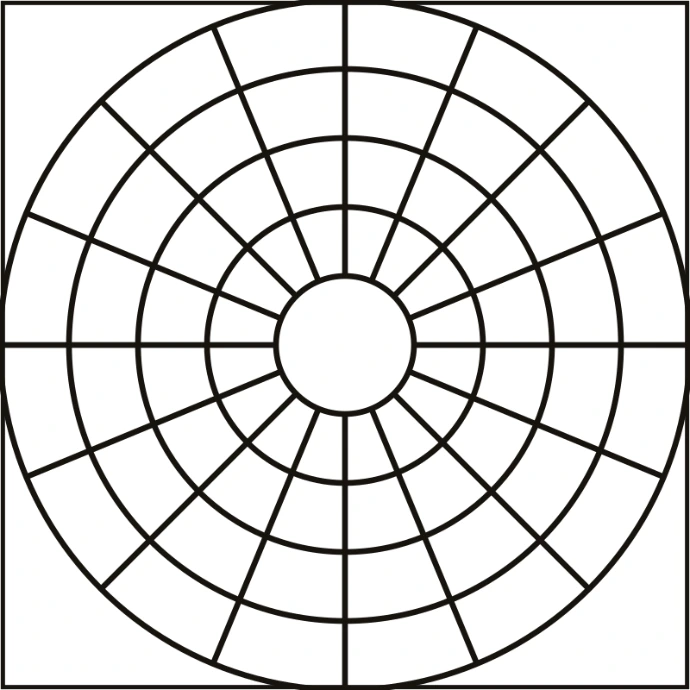
PL.14 — Circle / rose laying
Synonyms: concentric spirals
Concentric circles rhythmically punctuated by rays, as a central piece of a composition. Structures a square or a crossroads of paths and provides an immediate focal point.
Materials: sandstone paving, porphyry, blue stone
Usage: Focal point, courtyard centre, crossroads of paths.
Cut loss : medium to high
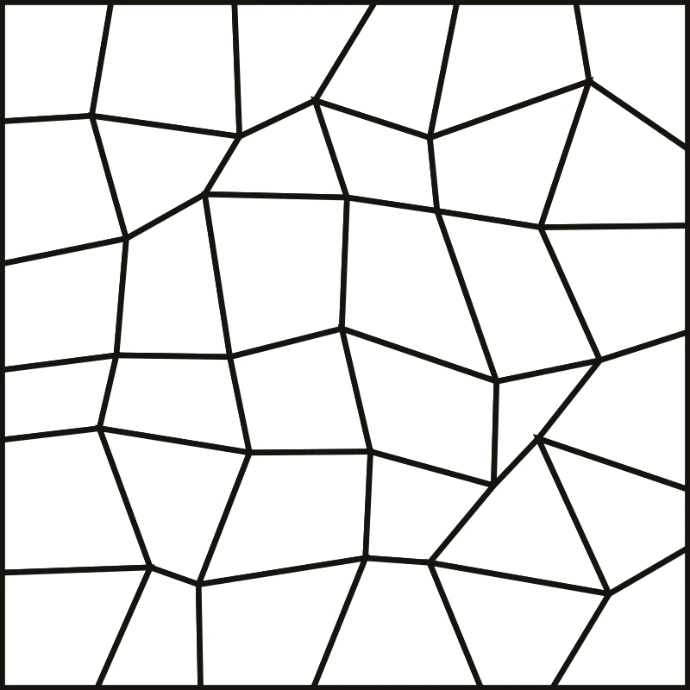
PL.15 — Opus incertum
Synonyms: irregular paving · free stone · crazy paving
Stone slabs with irregular contours, assembled like a puzzle with tight joints. Mineral, ancient and very natural appearance: each slab is chosen and adjusted on site.
Materials: split blue stone, sandstone, schist, quartzite
Usage: Terraces and paths of natural gardens, rural surroundings.
Cut loss : high
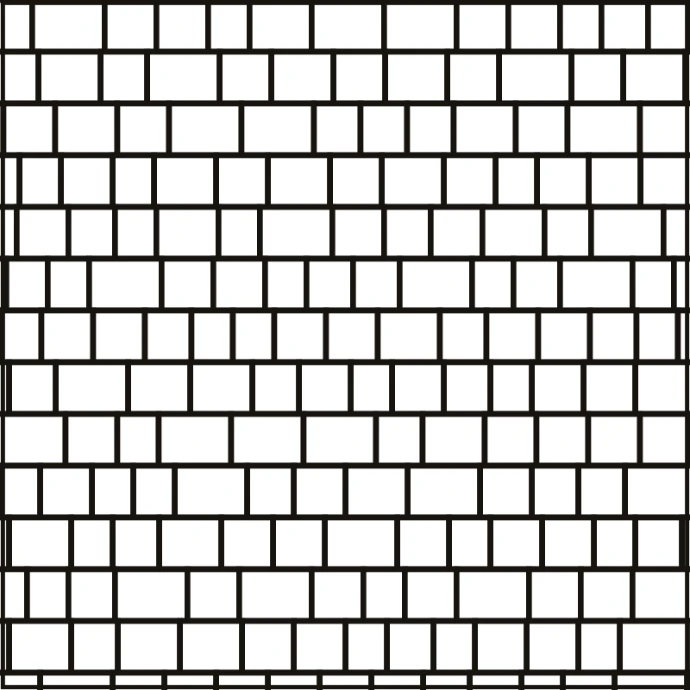
PL.19 — Mosaic with blurred joints
Synonyms: wild laying · small mosaic paving
Small almost square cobblestones laid without regular coursing: the vertical joints never align from one row to the next. A dense and lively appearance, typical of old alleys and courtyards, which absorbs the irregularities of the ground well.
Materials: porphyry, sandstone cobbles, blue stone, pebbles
Usage: Courtyards, alleys, characterful terraces, small surfaces.
Cutting loss: low
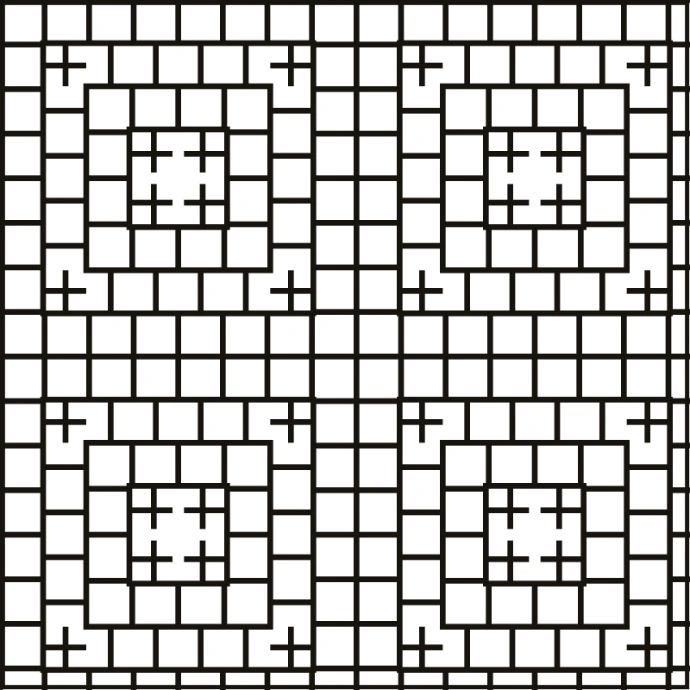
PL.20 — Orthogonal spirals
Synonyms: return with steps · rolled cobbles
The cobbles curl into concentric squares, returning in steps. An ancient road pattern, demanding to trace, which strongly structures a surface and draws the eye towards its centre.
Materials: sandstone paving, porphyry, blue stone
Usage: Central piece, courtyard, prestigious decorative motif.
Cut loss : high
FAMILY 5 — Opus & large formats (mixed formats, slabs)
Several formats interact within the same surface, or the slab transitions to a large format. Mineral elegance, non-linear joints, broad reading: the writing of generous courtyards and terraces.
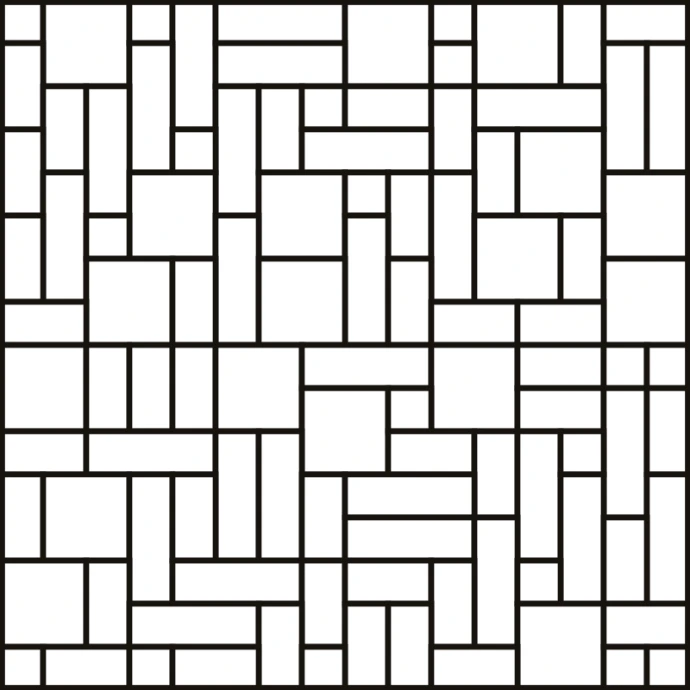
PL.16 — Roman opus
Synonyms: opus romano · multi-format Roman layout
Several square and rectangular formats combined according to a module that repeats without ever aligning the joints. The quintessential 'Southern stone' pattern — rich, calm, and timeless.
Materials: travertine, blue stone, sandstone, limestone
Usage: Large terraces, courtyards, pool surroundings.
Cutting loss: low
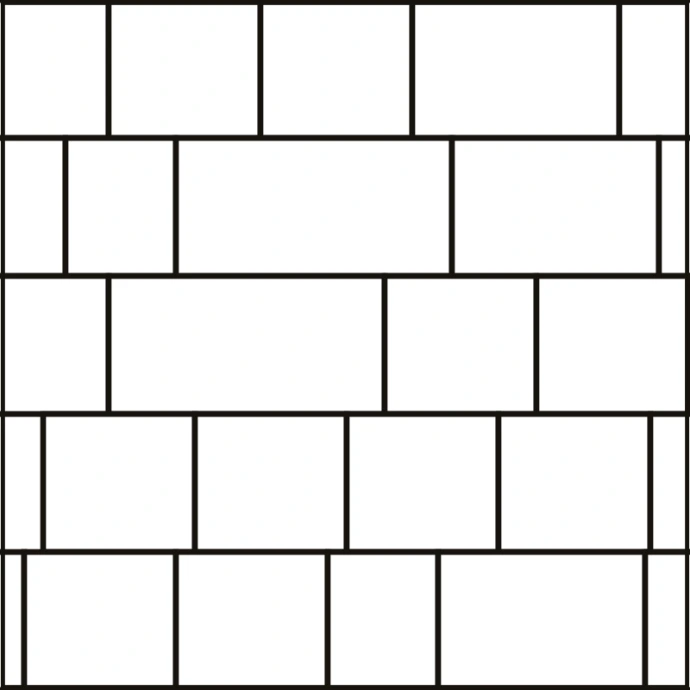
PL.17 — Band laying
Synonyms: Roman cut · rows of mixed widths
Rows of constant height but of varied lengths, with staggered joints from one course to another. A refined compromise between the rigour of the grid and the freedom of the design.
Materials: blue stone, sandstone, travertine
Usage: Terraces, wide pathways.
Cut loss: low to medium
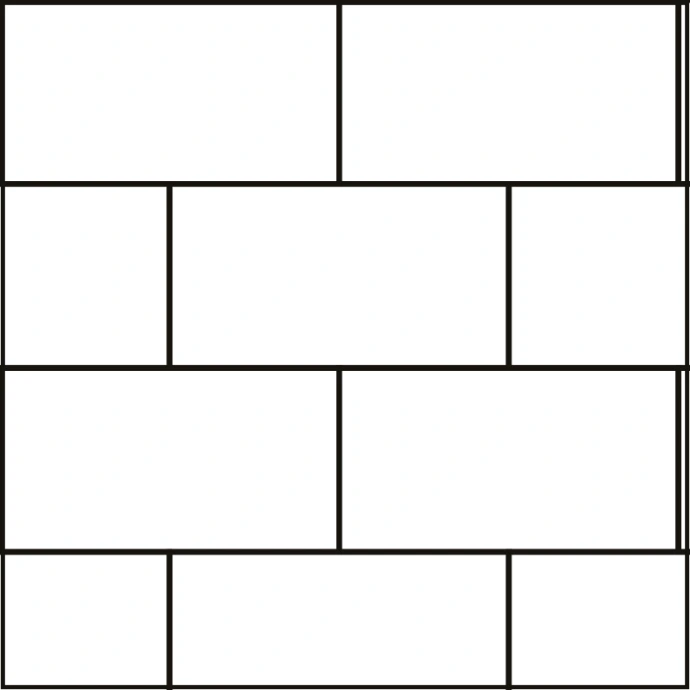
PL.18 — Large format
Synonyms: large slabs with staggered joints
Wide slabs laid with broken joints. Few joints, a calm and generous reading: the layout of contemporary terraces and courtyards.
Materials: blue stone, large format sandstone, concrete
Usage: Large terraces, courtyards, thresholds.
Cutting loss: low
Proper laying: the question of joints
A layout never exists in isolation: it must turn a corner, run alongside a wall, join another path. It is at these junctions that the work of the paver is judged.
At the junction of two pathways, the rows can cross at right angles, meet on the bisector of the angle, or connect diagonally — each solution draws a different meeting line, more or less visible depending on the location. In a square or a courtyard, it is often these connections that make the signature of a well-crafted work.
Directional patterns — herringbone, Hungarian point, diagonal — require particular attention to the edges: this is where the cuts multiply, and a cut that is too fine placed in full view betrays an improvised laying plan. A good layout anticipates these connections from the start: one chooses the starting point, distributes the cuts towards the least exposed edges, and reserves the most beautiful lines for the line of sight.
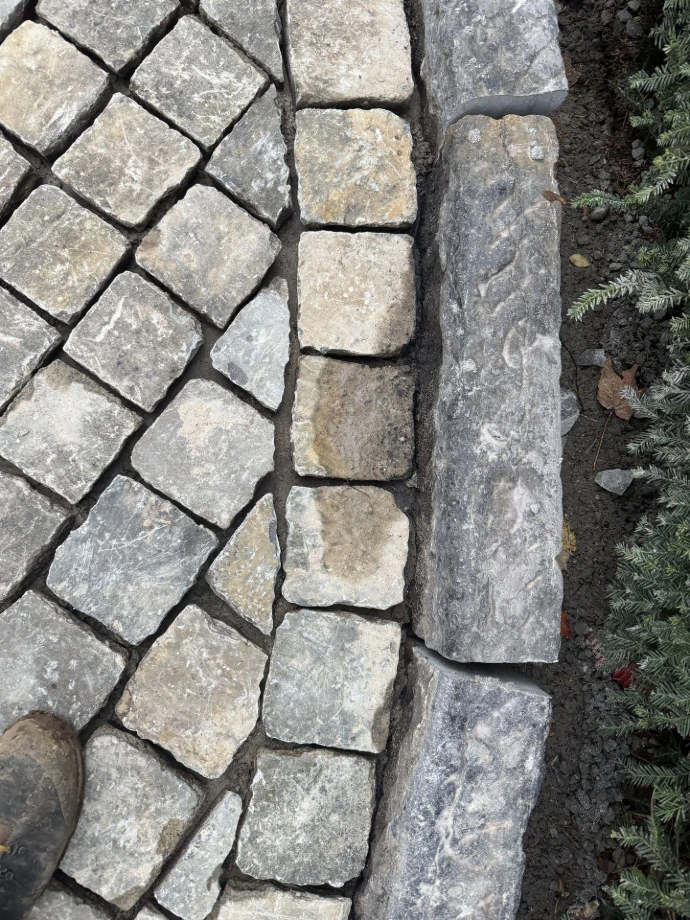
These boards are laying plans — the geometry of the tiling, independent of the material. The material (stoneware, blue stone from Belgium, terracotta, porphyry) and the colour are chosen afterwards, and radically transform the same pattern. A Hungarian point in patinated terracotta and the same one in sawn blue stone do not tell the same story.